01
Authoritative multiplayer foundation
Clients submit intent; the server owns movement decisions, attack timing, hit detection, damage, stamina and replicated gameplay state.
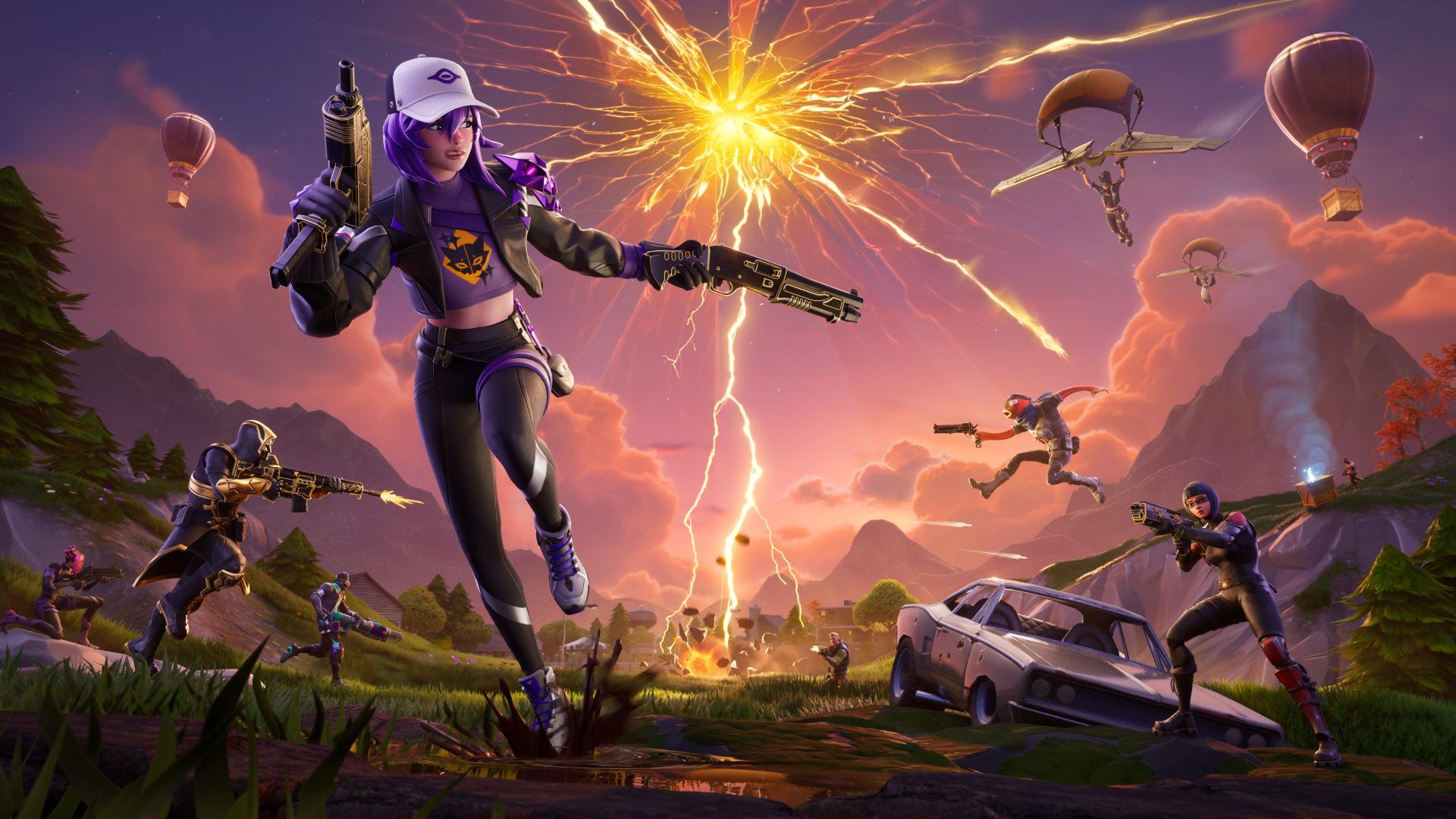
An ambitious multiplayer action world designed to bring many magical characters, melee fighters and pirate crews into the same living battlefield.
This is not being presented as a finished game. It is the new C++ production foundation intended to carry LATAMX Battle Zone toward a 2028 completion target. The code currently proves the hardest structural ideas: authoritative multiplayer ownership, ordered systems, reusable character composition, AI decision flow, phased combat and data-driven presentation.
The long-term game is much larger: numerous magical characters fighting in shared spaces, land and pirate battles, ships, abilities, progression and a connected world. That scope is ambitious, but it is possible if the project grows through measured vertical slices, performance budgets and clear system boundaries.
Clients submit intent; the server owns movement decisions, attack timing, hit detection, damage, stamina and replicated gameplay state.
Attacks move through anticipation, active and recovery windows, with data-defined moves, stamina costs, body-part combat volumes and per-attack hit deduplication.
Perception produces observations, the brain converts them into intent, and the action system turns intent into the same control interface used by players.
Gameplay publishes animation intent by stable keys. A central system resolves transitions and plays dynamic montages over native Unreal skeletal animation.
Interval-based updates, spatial partitioning, movement thresholds, line-of-sight tests and short-term memory reduce unnecessary AI work.
Control, locomotion, stats, visual profiles and combat animation triggers are designed around clear server ownership and client presentation.
A world-level scheduler owns system order across gameplay, movement, physics, post-physics and transform phases instead of scattering logic across actor ticks.
Stable keys select character visuals, animation sets, combat attachment bones and input mappings so content can change without rewriting gameplay code.
ACharacterActor is the shared base. Player and NPC specializations add only the components they need. Control, stats, combat, attack state, move sets and animation data remain focused and replaceable.
UGameplaySystemScheduler executes major work in an explicit order. Server-only decisions are separated from local camera and presentation work, making authority visible in the frame model.
UActorRegistry maintains weak references and component indexes. Systems query a relevant set instead of repeatedly searching every actor in the world.
UEventBusSubsystem publishes typed payloads. Movement can request animation and combat can trigger presentation without those systems directly owning one another.
Decision: Continuously evaluated gameplay is coordinated by UGameplaySystemScheduler.
Why: A known execution order makes multiplayer bugs, frame dependencies and performance costs easier to reason about.
Trade-off: The scheduler can become a bottleneck if ownership rules and phase boundaries are not kept explicit.
Decision: Actors are composed from focused components, while world systems process groups of actors.
Why: The same movement and combat path can serve players, AI and future magical characters without duplicating behavior.
Trade-off: Cross-system contracts need strong naming, lifecycle handling and tests to avoid hidden coupling.
Decision: Clients communicate intent, but the server decides outcomes.
Why: This is the safest base for competitive battles, many simultaneous characters and later naval combat.
Trade-off: Responsive online play will still require prediction, reconciliation, lag compensation and network-budget work.
Decision: An actor registry indexes weak actor references by component type.
Why: Systems can find relevant actors without calling broad world searches every frame.
Trade-off: Registration and component lifecycle correctness become critical and must be covered by soak tests.
Decision: A world event bus connects movement, attacks and animation through typed payloads.
Why: Producers do not need direct knowledge of every presentation or reaction system.
Trade-off: Event ownership, ordering and observability need conventions so debugging remains straightforward.
Decision: The runtime uses the character skeletal mesh, AnimGraph, cached poses and layered blending.
Why: Unreal already provides optimized hierarchy traversal, parallel animation and update-rate controls.
Trade-off: Animation Blueprint and C++ contracts must be documented and validated together.
Distinct magical characters with elemental schools, movement identities, counters, status effects and team roles—all built on shared ability contracts.
Crowded battles with players, AI allies, enemies and summoned entities, supported by relevance, AI budgets and scalable replication.
Crewable ships, cannon combat, boarding, ship damage zones, ocean traversal and transitions between deck combat and land encounters.
Islands, ports, open water, ruins and magical biomes connected through world partitioning, streaming and persistent match or session state.
Layered animation, VFX and audio that make large magical battles exciting without hiding attack intent or overwhelming players.
Authoritative outcomes, abuse resistance, telemetry, matchmaking inputs and server performance targets designed into the game rather than added at the end.
LATAMX Battle Zone is a long-horizon build. The current code is the beginning of a disciplined route toward the larger magical and pirate battlefield planned for 2028.